Rembukan Dojo
Classical Martial Arts for Stick & Sword Fighting
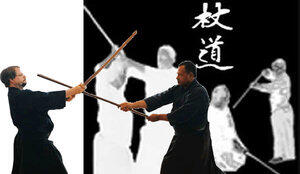
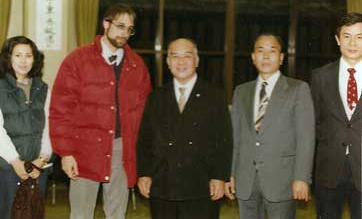
For those studying Shindo Muso Ryu Jodo ( SMRJ) in Tokyo when Shimizu Sensei died in 1978 a
Diaspora type of event took place. Infighting and petty politics between Shimizu's senior students created factions. Westerners had to make painful choices as to which Dojo and teacher they would associate with.My Sempai Bruce Brown and I chose Kaminoda, Tsunemori Sensei and his colleague Osato, Kohei Sensei as Kaminoda Sensei was in our estimation the best technical exponent of the art. He also had constant access to Shimizu Sensei’s ongoing insights, which was less available to other teachers. Osato Sensei’s skills were legendary.We continued to train at the Zoshukan, a space across the way from where Shimizu Sensei, the Headmaster of SMRJ had lived. The Dojo had a very nice feeling to it.
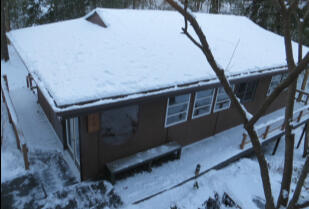
Perhaps naively I hoped that a reconciliation could be forged and the contentious atmosphere between rival teachers would abate. Although "blessed" by Shimizu Sensei to replace the original Rembukan before his death, the Zoshukan never became a central Hombu Dojo for SMRJ in the Tokyo/Kanto area after the Rembukan ’s demise. Those efforts were blocked by Kaminoda Sensei. This made the factionalism worse. Some of the actions that Sensei took were not always well received within the larger Jodo organization. Though his technical and teaching prowess were widely respected, our group would become somewhat outcasted, especially within the Kendo Renmei where technical authority was conferred on a rotational basis.As a foreigner with poor Japanese language skills, I was outside the political goings on within the Jodo community. I was there to study and that was my only concern. I trained at the Zoshukan, Dai Yon Ki Kidotai Dojo, Tomisaka Police Dojo, a school gym in Hatchobori and some private locations.In 1988 with the construction of our own member-built Dojo underway, Kaminoda Sensei granted us the use of the name Rembukan for the original namesake in Tokyo where I first started training. He apologized that the original Kamban (sign over the front door) had gone missing.In 1990 I became Kaminoda Sensei's first and only North American "Shibucho". Kaminoda Sensei didn't like to travel abroad and had only been to the U.S. once previously with Shimizu and Draeger Sensei for an U.S. Judo Association Camp Bushido event in Colorado in 1970. Mr. Brown had attended the camp as a Judoka from Iowa.
Besides his distaste for travel Sensei shared an opinion that many Japanese hold, that Westerners can never understand Japanese Budo. This is despite the fact that Draeger Sensei was his brother Deshi under Shimizu Sensei.From 1989 - 1994, Suzuki, Kenji Sensei, (Jodo & Iaido Nanadan), my Sempai at the original Rembukan Dojo and senior Muso Shinden Ryu Iaido student of Nagamoto, Hisashi Sensei, would visit us several times a year for extended periods to practice Jo and Iai. His efforts were continued by Kaminoda Sensei, ending the 24-year hiatus, at my invitation as his direct student, each year from 1994 - 2000. I was making frequent trips to Japan to augment training.Times change. Adapting to economic pressures such as rent, many Dojo in Japan decided to adjust standards and redefine themselves as "Sports Clubs" in an effort to attract and retain students and to stay financially viable. Long gone were the days of interviews and personal guarantors.Scandal struck the Zoshukan with the disappearance of a large sum of money collected to purchase shinken for the group. Kaminoda Sensei needed to find ways to make things right. He relaxed his criteria for conferring Makimono (scrolls conferring rank) and began converting seminars into seminars for profit . Adding foreigners to the headcount was an essential in adding to the Dojo coffers. Some Western guests would come for one “holiday” seminar in Japan and pronounce themselves direct Monjin (student) of Kaminoda Sensei. The Dojo’s atmosphere was changing.It was intimated with a nod and a wink that a Japanese receiving a Makimono was “more” legitimate than those purchased by foreigners, the ultimate outsiders when enough “green stamps” had been collected through seminar attendance.This distinction was bound to fail and it did. Wholesaling something rare only serves to diminish value for all and distort the legitimacy of Makimono going forward. As an aside, as great an authority and teacher as Shimizu Sensei was, he only awarded 8 Menkyo Kaiden in his long career and at a time when there were some very capable students who had the time to receive direct transmission.At the Rembukan, we couldn’t fully comprehend and it was painful to witness what was unfolding before our eyes. We believed some of these actions to be corrosive and detrimental to our raison d’etre. Could distance buffer us from some of these unwanted consequences? Despite our best efforts to communicate our concerns about decisions made at the Zoshukan, our only options were to abide or disassociate.Confronted by events over which we had no control, our path was determined after 10 of our number went to a Gashuku at Kashima in November 2007. By unanimous vote we opted to remain in loose association with the Nihon Jodokai. Protracted efforts to find solutions failed. There was no singular event but a string many incidences that culminated in a decision that wasn’t made lightly. It took the better part of a decade to materialize. We did not break from Sensei and the Nihon Jodokai but we minimized contact by bowing out of events and stalling in hosting open-mat seminars here. We maintained relationships with Japan in private continuing to practice while keeping a polite distance from controversy.I can’t overstate the sadness I felt, watching a Dojo I had been part of for almost three decades go through these changes. I’d witnessed many excellent people departing the Zoshukan, questionable lapses in financial accountability, and wondered if the classical Makimono system would survive.More than that, my relationship with Kaminoda Sensei spanned many decades (we met in 1974) and for a number of years we enjoyed almost a father & son relationship. Although we were of the same generation under Shimizu Sensei, Kaminoda Sensei took over the responsibility of teaching me in earnest. I’m obligated to him forever. Our relationship had created jealousy within the group in Japan and opportunities for opportunists within our Rembukan.It took time to decode some of what was unravelling. One of my English-speaking Japanese Kohai wanted to remove me from the scene for his own ambitions. Some here wanted to pursue Makimono perhaps failing to understand what was going on in Japan or not caring, whether the license was deserved or not. It made for an alliance of mutual benefit aligned with the times.Despite these bumps in the road the Rembukan journey has been enriching. The original Rembukan existed for less than a decade. The Zoshukan is gone now and a future home Dojo location in the Tokyo area is uncertain. Osato Sensei, who resides in Sendai, is the most senior active Jodo practitioner in Japan as of this writing. Our physical Dojo recently celebrated its 35th anniversary in 2023.In Japan in 2024 our Rembukan was recognized for promoting good Budo, acknowledged for our Dojo’s contribution for spreading SMRJ in the U.S.A. and Canada, our longevity and most importantly in developing 3 Menkyo grade instructors . Our perseverance and adherence to the preservation and perpetuation of Jodo was recognized and applauded.Our rich history includes having many of Japan’s most senior Jodo exponents visit and share the mat with us.The thing about journeys is that sometimes we don’t know where the adventures will lead us. I’m grateful for these experiences, even the painful ones. I'd add that in rereading this essay these many years after it was first penned in 2010 that in retrospect our decision was the best option we could’ve made under the circumstances.I was a young and impressionable man when I first met Shimizu Sensei. He wasn’t much of a talker. When he did, folks listened. His vision was that Jodo would be helpful the world over. He wanted to see good instructors develop good people. He said that “just like a Jo is straight, it can help teach people to be straight and correct”. He wasn’t suggesting that Jodo was for everyone. He and Draeger Sensei interviewed candidates. I’d theorize that he hoped that a vetted core of practitioners that passed muster would help Jodo prosper in a healthy way. Shimizu Sensei wasn’t pretentious or self-aggrandizing. He influenced me greatly and I wanted to pay forward by supporting his goals as best I could.If justification is needed to write this essay, then I’m trying to keep the record straight for those that love Jodo by striving to be historically factual while keeping faith with Shimizu Sensei. Any failure in judgement is mine alone as I struggle with the existing tension between reporting events and stopping short of airing dirty laundry.Our Japanese relationships remain strong and vital. I trained under Shimizu Sensei who was taught by Shiraishi Hanjuro Hanshi. When Shimizu Sensei died, I was taught by Kaminoda and Osato Sensei. The direct succession is clear. There are other groups and other journeys. This is ours.
